

Download Details
- Version
- 7.0 (latest)
- File size
- 160.8 MB
- License
- Free Trial
- Developer
- Adobe
- Supported OS
- Windows 11, Windows 10, Windows 7, Windows 8.1
- Installers
- 64-bit (x64), 32-bit (x86), Offline
- Downloads
- 95793+
 Reviewed by Mohamed Zaki
Tested on Windows 11 and 10 · · How we review
Screenshots
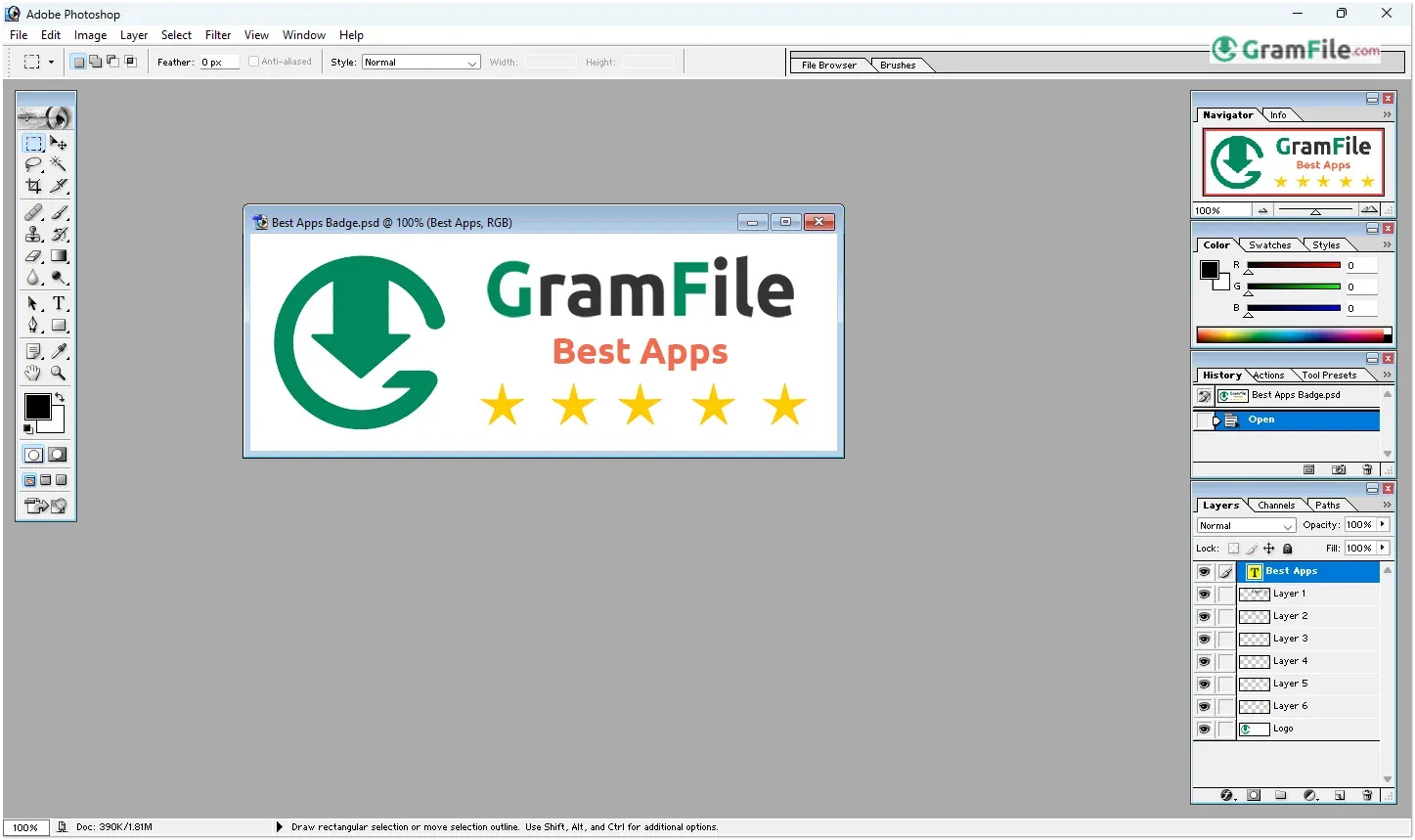
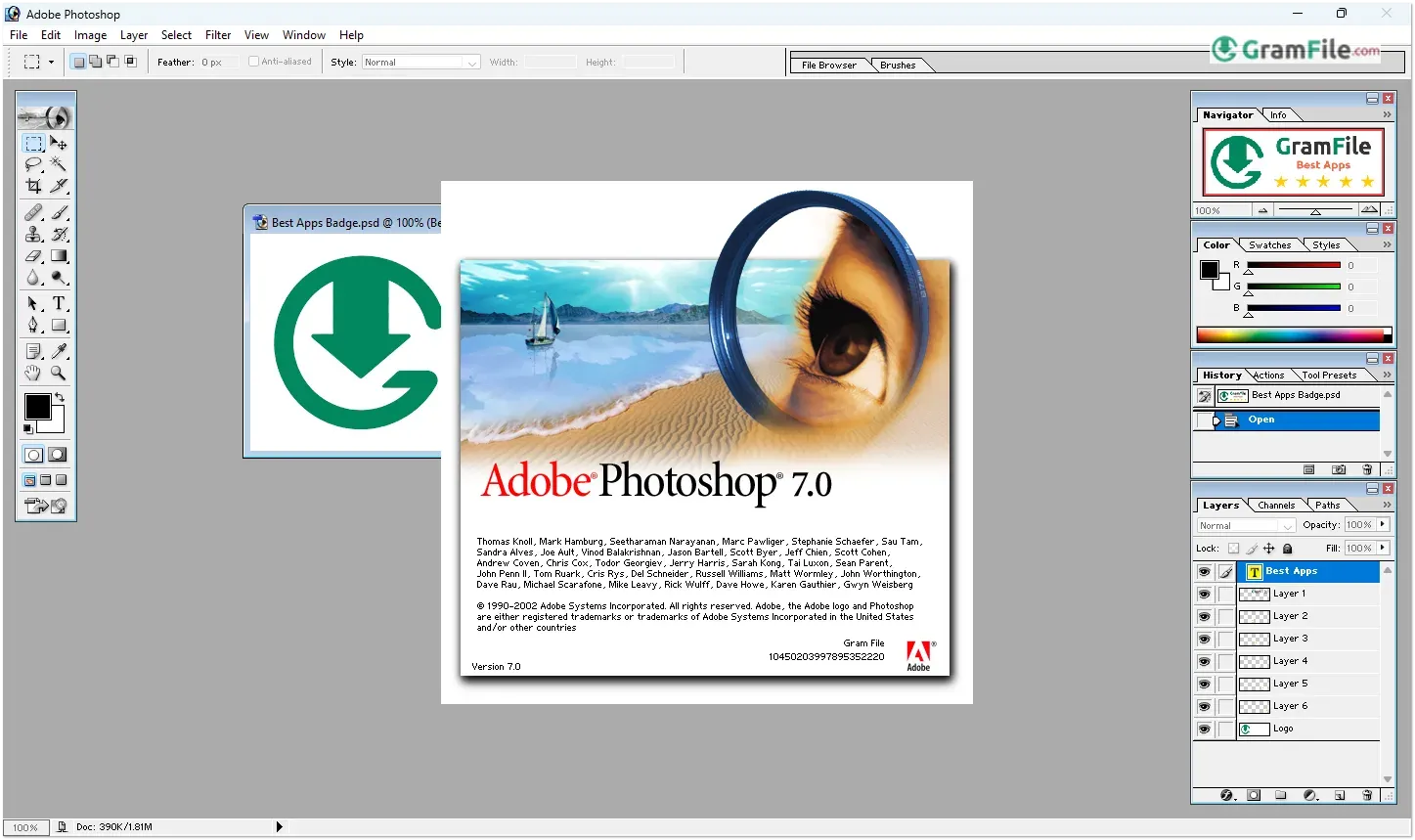
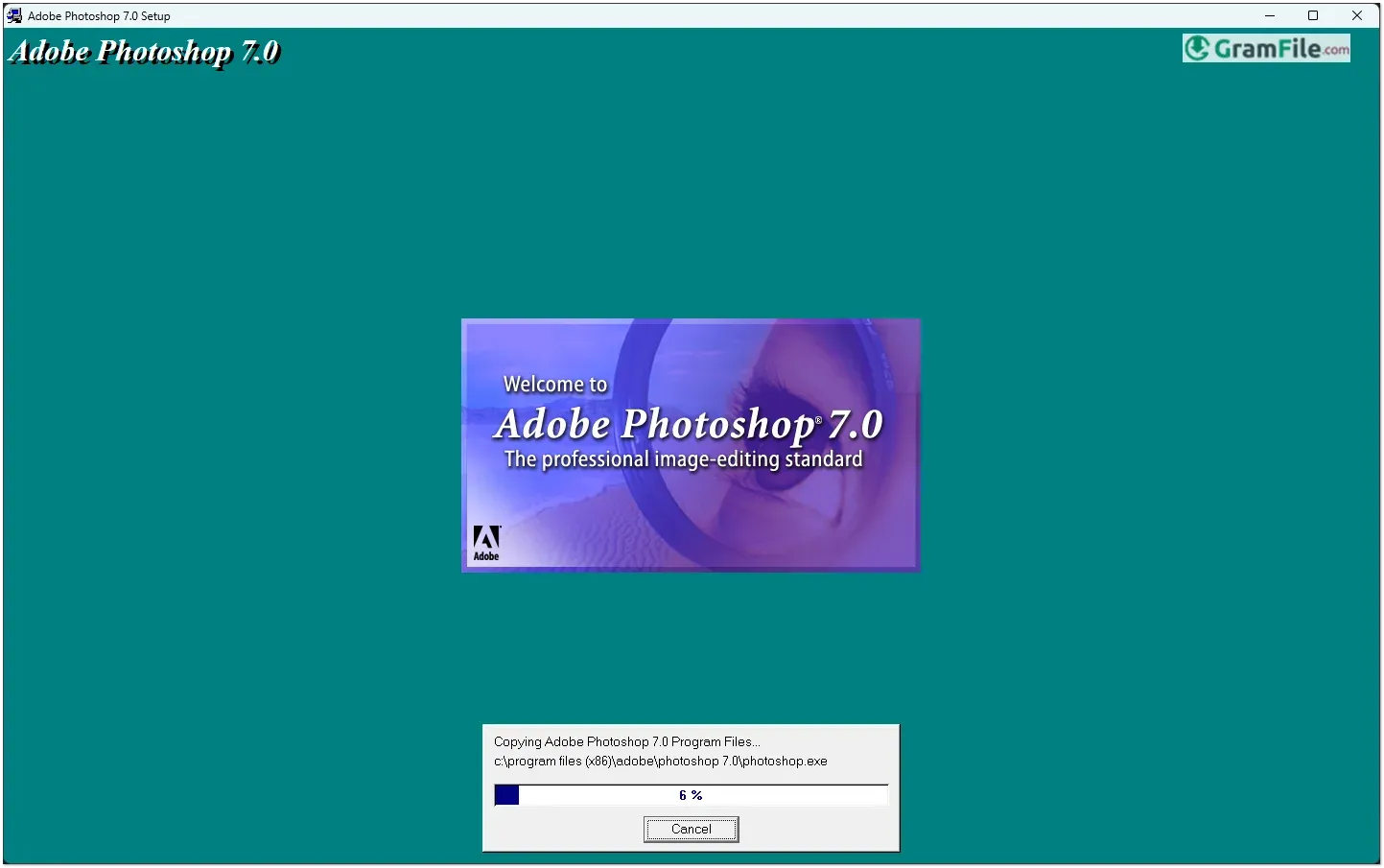
Adobe Photoshop 7.0, released in 2002, marked a significant milestone in digital image editing, offering powerful tools for photographers, designers, and artists.
This version introduced key features like the Healing Brush, enhanced text controls, and a more intuitive workspace, solidifying Photoshop’s dominance in creative software.
Originally developed in 1987 by Thomas and John Knoll, Photoshop evolved from a simple display tool into the industry standard for raster graphics.
Photoshop 7.0 further refined this legacy, balancing advanced functionality with accessibility, making it a favorite among professionals and enthusiasts alike.
What is Adobe Photoshop 7.0?
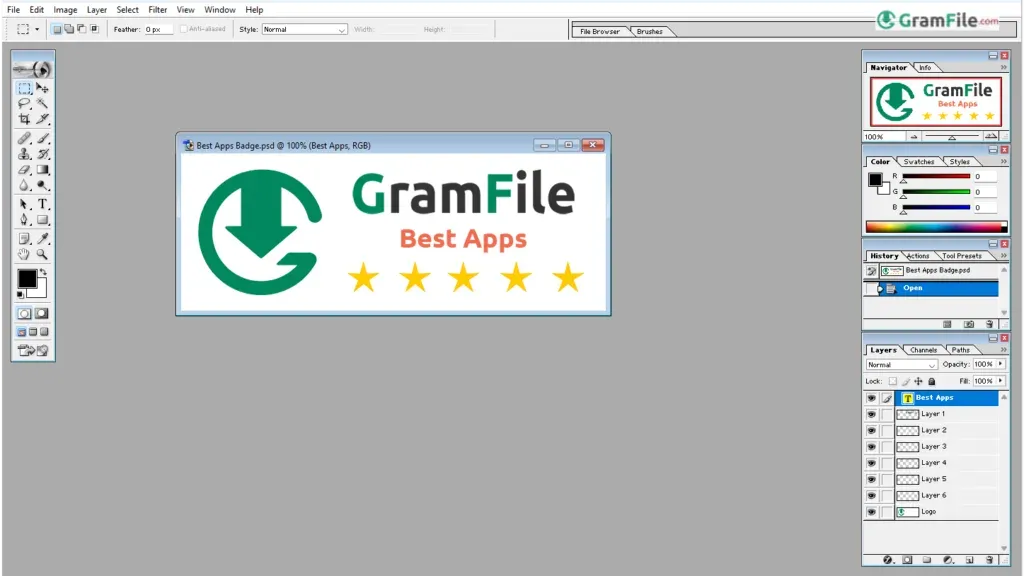
Adobe Photoshop 7.0, released in 2002, is a landmark version of the world’s leading image-editing software.
Designed for Windows, it brought groundbreaking tools that streamlined digital photo manipulation, graphic design, and artistic workflows.
While newer versions have since emerged, Photoshop 7.0 remains a nostalgic favorite for its balance of simplicity and powerful features, making it a reliable choice for retro computing enthusiasts and professionals who prefer its straightforward interface.
Key Features and Highlights
- Healing Brush Tool – A revolutionary feature that allowed seamless removal of imperfections by sampling nearby pixels, paving the way for modern retouching.
- Text on a Path – Enhanced typography control by letting users place text along custom shapes and curves.
- File Browser – An early version of Adobe Bridge, making it easier to organize and preview images before editing.
- Workspace Customization – Savable workspaces for different tasks, improving workflow efficiency.
- Enhanced Web Output – Better optimization for web graphics, including improved GIF and JPEG export options.
- Painting Engine Upgrades – More natural brush dynamics, giving digital artists better control over strokes.
- Macromedia SWF Support – Allowed exporting layers as SWF files for early web animations.
How to Download & Install
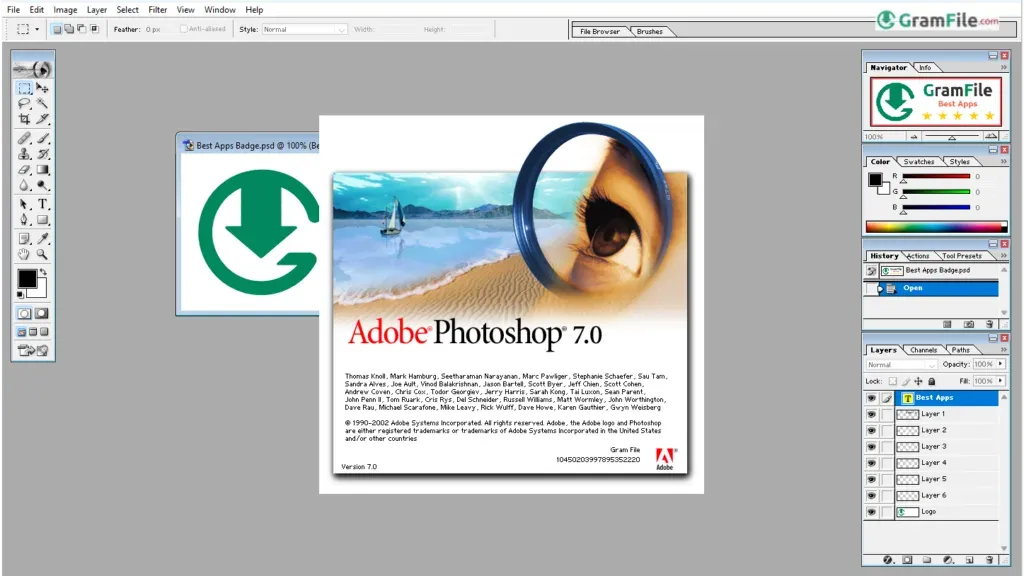
Since Adobe no longer officially sells Photoshop 7.0, finding a legitimate copy can be challenging. However, you can still get the original installer by clicking the download button above:
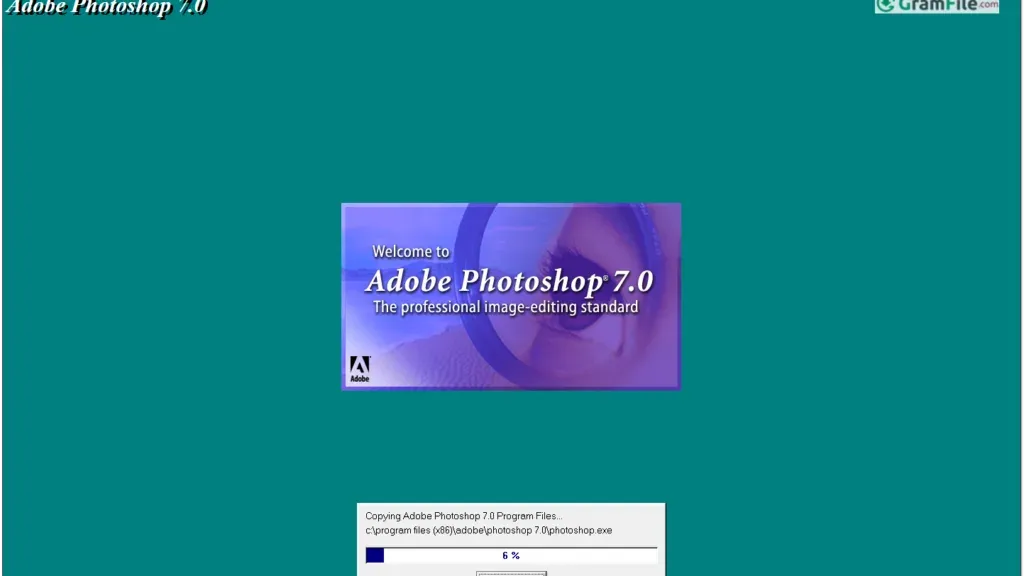
- Run the Installer – Insert the CD or launch the setup file.
- Follow the Prompts – Accept the license agreement and choose installation preferences.
- Enter a Valid Serial Key – Required for activation (if you own a licensed copy).
- Complete Installation – Once finished, launch Photoshop 7.0 from the Start menu or desktop shortcut.
*Note: While Photoshop 7.0 is still running well on modern Windows versions (10/11), it may require compatibility mode settings.*
Pros & Cons
What we liked
- Fast and lightweight
- Simple, clean interface
- Healing Brush for easy retouching
- Works on old PCs
- No subscription required
What we didn't like
- Missing modern tools (AI, RAW editing)
- No 64-bit or GPU support
- Discontinued (no updates)
- Hard to find legally
Best Adobe Photoshop 7.0 Alternatives


Conclusion
4.3out of 5 · 216 user ratings
Why Choose Photoshop 7.0?
Adobe Photoshop 7.0 remains a nostalgic yet functional choice for users who need a lightweight, no-frills image editor.
Its straightforward interface, low system requirements, and essential tools (like the Healing Brush and layer support) make it ideal for:
- Older PCs that struggle with modern software
- Basic photo editing (retouching, cropping, filters)
- Legacy workflows that don’t require AI or cloud features
Photoshop 7.0 vs. Modern Alternatives
| Factor | Photoshop 7.0 | Newer Alternatives |
|---|---|---|
| Speed | ✅ Blazing fast on old hardware | ❌ Heavier, needs better specs |
| Features | ❌ Lacks AI, RAW editing, 3D | ✅ Packed with advanced tools |
| Cost | ✅ One-time purchase (if owned) | ❌ Subscription-based (CC) |
| Compatibility | ❌ Struggles on Win 10/11 | ✅ Optimized for modern OS |
| Support | ❌ Discontinued | ✅ Regular updates |
The Bottom Line
Photoshop 7.0 is a relic of its time, simple, efficient, but outdated. If you need basic edits on an old PC, it’s still usable. But for professional work, modern tools like Photoshop CC, Affinity Photo, or GIMP are far superior.
✔ Who Should Use It?
- Retro computing enthusiasts
- Users with ancient hardware
- Those avoiding subscriptions
✖ Who Should Skip It?
- Professionals needing modern features
- Anyone working with RAW files or high-res assets
- Users who value security updates
In 2024, Photoshop 7.0 is more of a digital time capsule than a practical tool, but for the right user, it still gets the job done.
FAQ
Does Photoshop 7 work on Windows 10 and Windows 11?
Yes, in most cases. It is a 32-bit program written for the Windows XP era, so Adobe never officially supported it on modern Windows. To run it, right-click the installer or the app shortcut, open Properties, go to Compatibility, and choose Windows XP (Service Pack 3). Running it as administrator also avoids many install and save errors.
What are the system requirements for Photoshop 7?
The original requirements were a Pentium-class processor, 128 MB of RAM, about 280 MB of free disk space and an 800×600 display. Any PC made in the last 15 years far exceeds this. Because it is a 32-bit program, it can only use around 2 to 4 GB of RAM, however much your system has.
Do I need a serial number to install Photoshop 7?
Yes. Photoshop 7 is commercial software and asks for a valid serial number during setup. Adobe no longer sells this version, so a legitimate serial is normally one that came with a license you already own. If you have no license, consider free alternatives such as GIMP or Photopea.
How can I check that a Photoshop 7 installer is safe?
Scan the file with your antivirus and upload it to VirusTotal before running it. Be cautious with any installer that tells you to disable your antivirus, or that bundles extra “patch” or “keygen” tools, because those are common ways malware is spread. Download from sources that publish file details and show recent user feedback.
Which image formats can Photoshop 7 open and save?
It handles PSD, JPEG, PNG, GIF, TIFF, BMP, PDF and EPS. It has no built-in support for WebP, HEIC or most modern camera RAW files, so convert those to JPEG or PNG first. PSD files saved in newer Photoshop versions may only open if “Maximize Compatibility” was turned on when they were saved.
How do I fix the “scratch disks are full” error in Photoshop 7?
Go to Edit > Preferences > Plug-Ins & Scratch Disks and set the scratch disk to a drive with plenty of free space, such as a secondary drive. Also clear temporary files, close other heavy apps, and restart Photoshop. The error is common on modern PCs because the program was designed for much smaller drives.
Is Photoshop 7 still good enough for photo editing today?
It still covers layers, masks, selections, retouching, filters and basic text well, and it runs fast even on weak PCs. It lacks AI tools, Smart Objects, 64-bit performance and modern file support. It suits simple edits and learning the basics, while heavy professional work is better served by a current editor.
Found a problem with this download? Report an outdated version, broken link, suspicious installer or incorrect information.
 Zoom Workplace
 Nitro PDF Pro
 Sumatra PDF
 IrfanView
 K-Lite Codec Pack
 WinRAR