
Download Details
- Version
- Service Pack 4 (SP4) with Update Rollup 1 (latest)
- File size
- 368.9 MB
- License
- Free Trial
- SHA-256 checksum
9fcf53ec59a4c0eb303b7db26947660cd42be70f44e5be49b6d13bd6c5f78a2e- Developer
- Microsoft Corporation
- CPU Support
- 32-bit (x86), Offline
- Downloads
- 4510
- Rating
- 4 out of 5 · 16 reviews
- File name(s)
- en_windows_2000_sp4_pro_5.0.2195.6717_MSDN_ZRMPFPP_EN.iso
 Reviewed by Mohamed Zaki
Tested on PC, Virtual Machine · · How we review
Screenshots
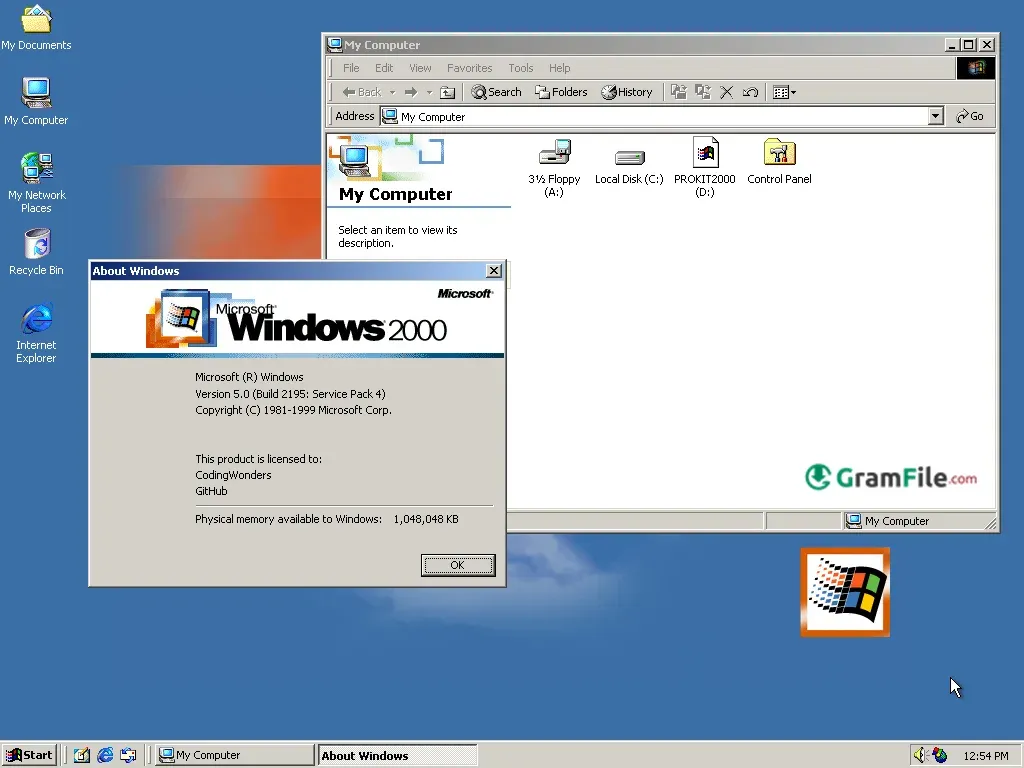
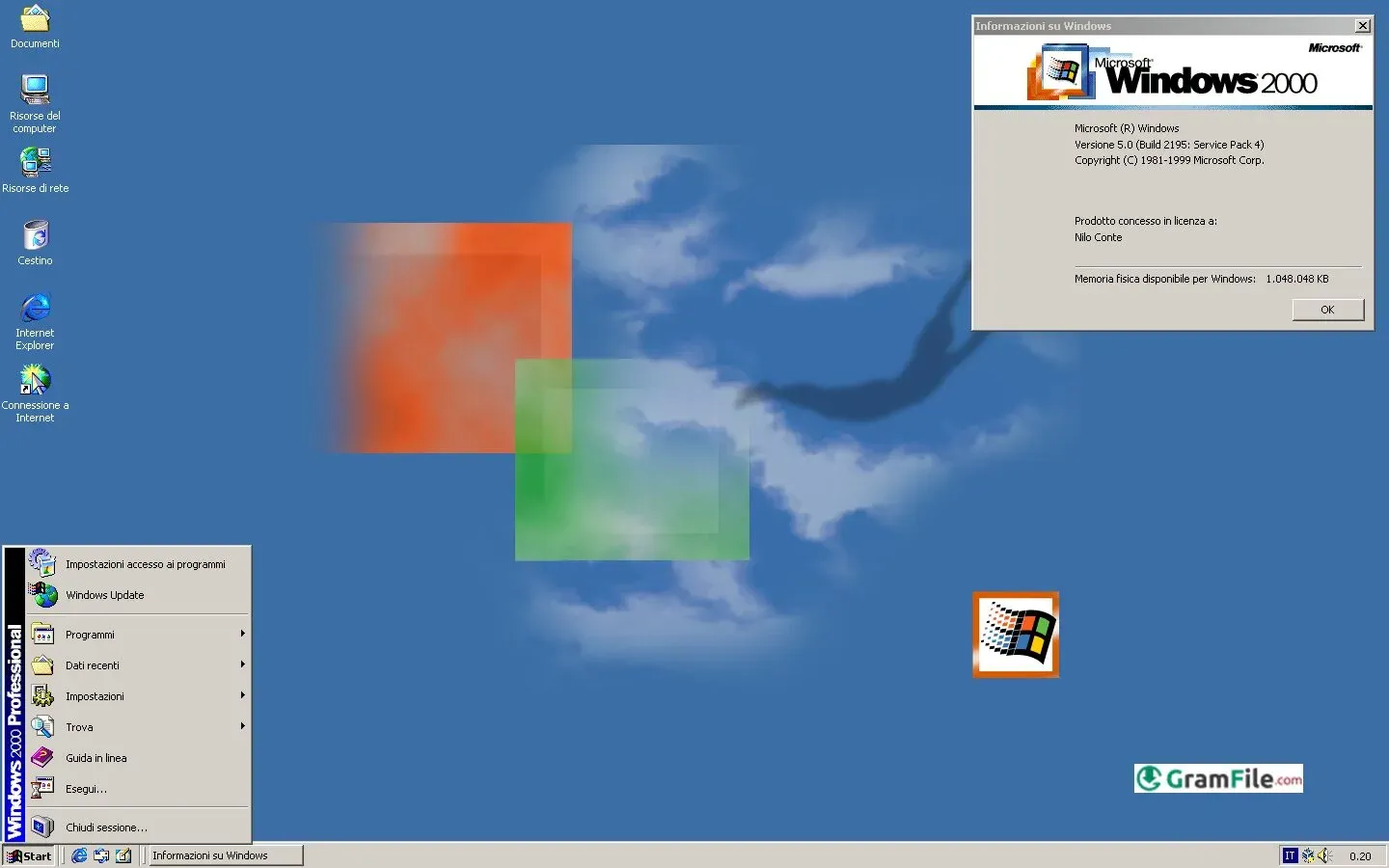
Windows 2000 arrived at a time when computer users demanded more stability, better security, and smoother performance than what older consumer systems could provide.
It was built on the NT family, which had already earned respect in professional settings.
While some earlier Windows versions were designed mainly for home use, Windows 2000 bridged the gap between home and business computing with a modern structure, better hardware support, and improved reliability.
Introduced in early 2000, the system was created as the successor to Windows NT 4.0 and served as a foundation for future Microsoft operating systems.
It was the missing link between classic Windows and the new era of professional-grade computing. Even today, the influence of Windows 2000’s design choices is still visible in newer Windows versions.
What is Windows 2000?
Windows 2000 is a Microsoft operating system built mainly for business, professional work, and server environments. It uses the NT kernel, which focuses on safety, stability, and efficient hardware communication.
Unlike many older systems of its time, Windows 2000 supported modern networking, plug-and-play devices, advanced file protection, and consistent performance over long periods of use.
Key Features and Highlights
- Stable NT-based architecture.
- Enhanced plug-and-play support.
- Reliable NTFS file handling.
- Built-in Windows Update system.
- Improved system recovery tools.
- Better hardware compatibility.
- Stronger networking features.
- Smarter driver management.
- Automatic digital driver signing.
- Powerful Active Directory support.
How to Download & Install
Although it is a legacy system today, installation remains easy if you follow the proper steps:
Step 1: Prepare Installation Files
You will need:
- A Windows 2000 ISO image
- A bootable USB or virtual machine software
- Valid installation license key
Step 2: Create Bootable USB (for real hardware)
- Insert your USB drive.
- Open any bootable USB creator tool.
- Select the ISO file.
- Choose FAT32 format.
- Create the bootable drive.
Step 3: Start Installation
- Boot from USB or load the ISO in a VM.
- Select your language and keyboard.
- Create or format your partition.
- Choose NTFS for best stability.
- Allow setup to copy system files.
- Enter name, password, and product key.
Step 4: Finish Setup
- Choose workgroup or network domain.
- Configure basic settings.
- Restart the system.
Windows 2000 will complete its installation and boot into its classic interface.
System Requirements
Windows 2000 was created for modest hardware, but modern setups still support it easily.
Minimum requirements
- CPU: 133 MHz
- RAM: 64 MB
- Storage: 2 GB
- Graphics: VGA
Recommended
- CPU: 300+ MHz
- RAM: 256 MB
- Storage: 4 GB+
- Graphics: SVGA
These lightweight requirements make Windows 2000 ideal for old PCs and virtual machines.
32-bit and 64-bit Version Availability
Windows 2000 was available in 32-bit editions for all users, while 64-bit support was limited to specific server editions. The 32-bit editions remain more stable and more compatible with older hardware.
Different Editions of Windows 2000
Windows 2000 was available in four main versions:
- Professional – For office workstations and personal PCs.
- Server – For small office server environments.
- Advanced Server – For larger businesses needing clustering.
- Datacenter Server – For enterprise-level performance and stability.
Each edition was built with extra tools and network features for different work scenarios.
How to Buy and Activation
Windows 2000 is no longer sold as a new product, but archived retail copies, digital ISO images, and old stock media sometimes appear through legal sellers of legacy software.
Activation uses a valid product key, entered during installation.
There is no online activation process for Windows 2000 like modern systems; it uses a traditional product key method.
Pros & Cons
Pros
- Very stable performance always.
- Lightweight and fast system.
- Works well on old hardware.
- Clean design and layout.
- Reliable file protection tools.
Cons
- Limited modern app support.
- No updated security patches.
- Outdated browser features.
- Some drivers unavailable today.
- No modern hardware compatibility.
Best Windows 2000 Alternatives
-
 Windows 11
A simple and smooth system that makes your PC feel modern and attractive.
-
 Windows 10
A smart and stable operating system made for everyone.
-
 Windows 7 Professional
A stable and dependable operating system for professionals.


Conclusion
4out of 5 · 16 user ratings
Windows 2000 stands out because it is stable, structured, efficient, and built with an architecture that influenced many future systems. Its clean behavior makes it ideal for learning, retro tech use, or running classic applications without crashes.
Compared to other old systems, Windows 2000 is more reliable than Windows 98, more polished than Windows NT 4.0, and more stable under heavy workloads than early home editions of Windows XP.
If you want a fast, consistent, and historically important operating system, Windows 2000 remains one of the strongest legacy choices.
| Feature | Windows 98 | Windows NT 4.0 | Windows 2000 | Windows XP |
|---|---|---|---|---|
| Kernel | Hybrid 9x | NT | NT (modernized) | NT (enhanced) |
| Stability | Moderate | High | Very high | Very high |
| Security | Low | Medium | High for its time | Higher |
| Plug-and-Play | Weak | Very limited | Strong | Strong |
| Driver Support | Wide but unstable | Limited | Balanced and reliable | Wide and modern |
| Memory Handling | Basic | Good | Advanced | Advanced |
| Ideal Usage | Retro gaming | Old servers | Workstations & retro servers | General users |
Found a problem with this download? Report an outdated version, broken link, suspicious installer or incorrect information.