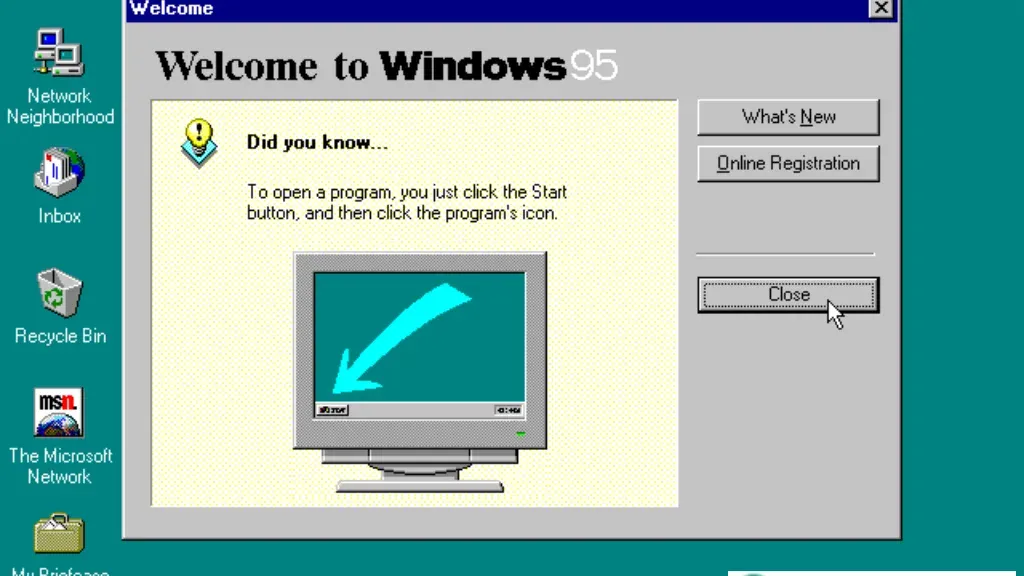


When Windows 95 arrived in August 1995, it changed the world of personal computing in a way no previous version of Windows had managed. It was not just an upgrade; it was a complete shift in how everyday users interacted with a PC.
For the first time, Microsoft blended a friendly graphical interface with a stronger technical foundation, making computers more usable for both beginners and advanced users.
Windows 95 was developed after years of experimentation with Windows 3.x and MS-DOS. Microsoft wanted a true consumer-friendly OS, something more intuitive, more visually organized, and less demanding on users.
So they introduced the Start Menu, the Taskbar, and a redesigned desktop environment built around clarity and efficiency.
Even though Windows 95 is now a legacy system, it still holds historical and nostalgic value. Many people use it for retro gaming, vintage hardware restoration, educational experiments, or simply out of appreciation for classic technology.
What Is Windows 95?
Windows 95 is a consumer operating system released by Microsoft in 1995, designed to replace Windows 3.1 and MS-DOS as the main OS for home computers.
It introduced the Start button, taskbar, plug-and-play hardware setup, improved multimedia support, and a more stable 32-bit architecture. It became the foundation of all modern Windows versions.
Latest Improvements Found in the Final Windows 95 Build
Even though no new updates are released today, the final editions introduced notable improvements:
- FAT32 support for large hard drives
- Better USB awareness in later builds
- Enhanced multimedia support
- Improved hardware compatibility
- More stable plug-and-play
- Revised Internet tools
- Optimized boot sequence
Key Features & Highlights
- Start Menu introduced.
- Taskbar for quick navigation.
- Improved file explorer.
- Plug-and-play hardware setup.
- 32-bit application support.
- Faster multitasking.
- MS-DOS integrated backend.
- Better multimedia playback.
- Early USB detection.
- Enhanced system stability.
How to Download & Install
These steps are written for legal, licensed installation using original media or authorized digital copies.
Step 1: Get the Official ISO or CD
You need a legally obtained ISO file from original media, a restoration CD, or licensed archive.
Step 2: Prepare the Installation Environment
You can install Windows 95 in several ways:
- On old physical hardware
- In a virtual machine (VirtualBox, VMware, QEMU, PCem)
- Using an emulation environment for retro gaming
Step 3: Create a Boot Disk
Windows 95 requires a bootable MS-DOS disk for formatting and setup. Many virtual machine tools auto-generate one.
Step 4: Start the Setup
Run:
A:\> setup
Accept agreements and follow on-screen instructions.
Step 5: Choose Typical or Custom Installation
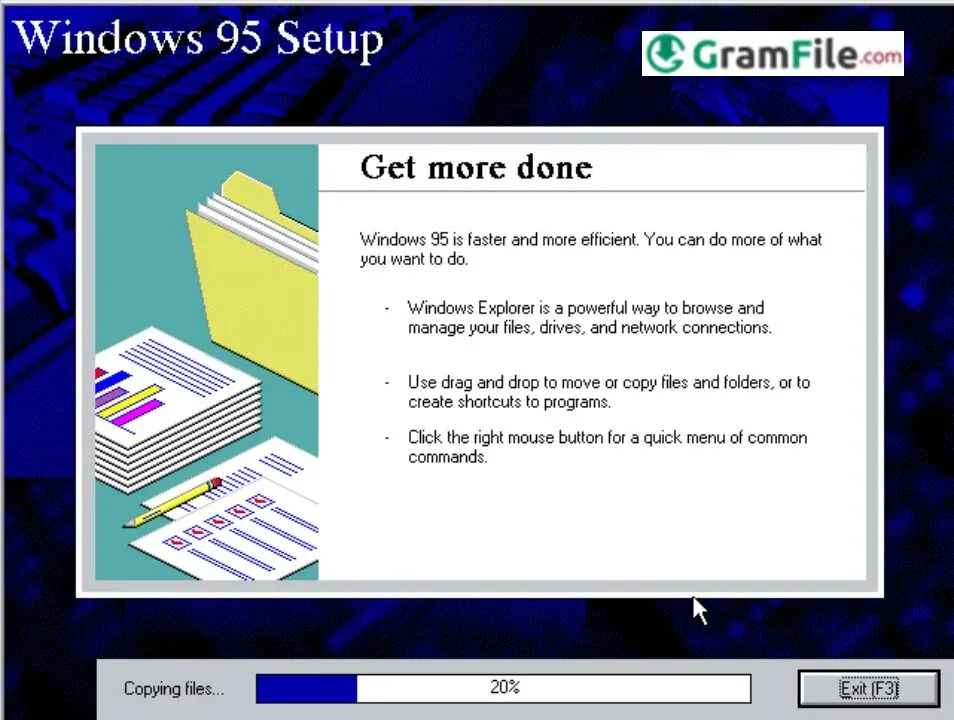
Typical is recommended for beginners.
Custom allows you to enable optional components such as:
- Imaging utilities
- Internet tools
- Multimedia support
6. Set Time and Date.
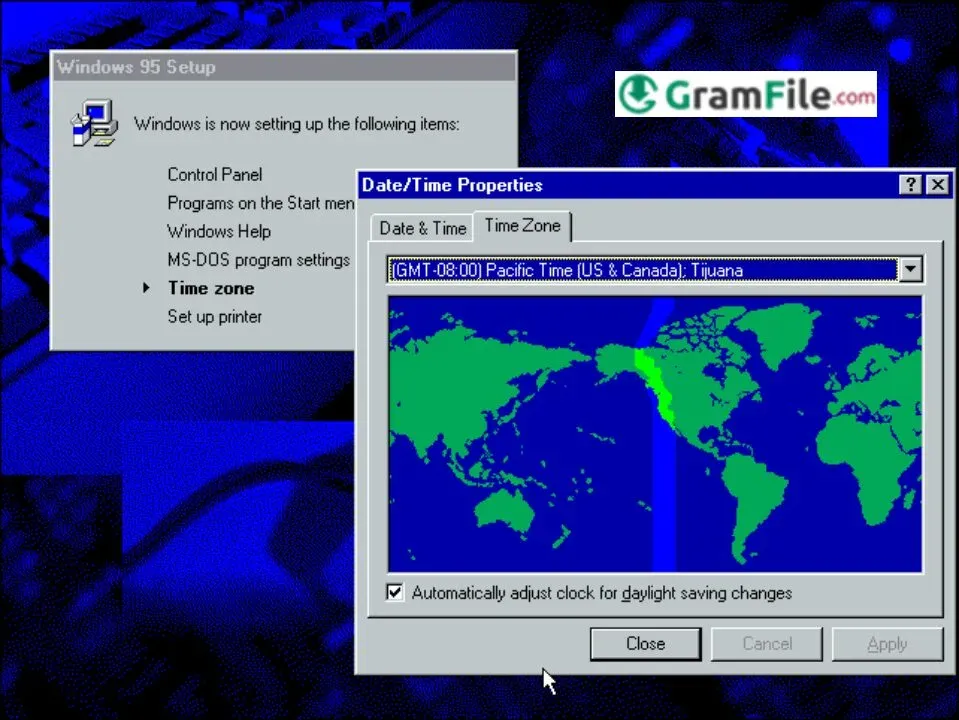
Step 7: Restart and Finish Setup
Windows 95 will reboot several times to complete installation.
After that, you can install drivers for video, sound, and network cards via Device Manager.
System Requirements
Windows 95 has extremely low requirements compared to modern systems:
- CPU: 386DX or higher (486 recommended)
- RAM: 4 MB minimum (8 MB recommended)
- Storage: 50–55 MB for installation
- Display: VGA or better
- Input: Keyboard, mouse (optional but recommended)
Different Editions of Windows 95
Windows 95 came in several releases:
- Windows 95 Original (RTM)
- Windows 95A – improved stability
- Windows 95B (OSR 2) – FAT32 support, better storage
- Windows 95C (OSR 2.5) – integrated Internet Explorer updates
The B and C editions are the most common for retro systems.
How to Buy and Activate Windows 95
Because Windows 95 is discontinued, you can only buy it as:
- Vintage boxed copies
- OEM restore CDs
- Licenses from old hardware bundles
- Certified used software stores
Activation was not required for Windows 95.
Only a valid product key printed on the original package or manual is needed.
Warning Against Serials, Cracks, and Patches
Never download:
- Key generators
- Illegal serials
- Cracked ISO files
- Modified system patches
These files may contain harmful code, corrupted system files, or malware.
Always use genuine, unmodified installation media.